
Top Finds On Amazon


Most dating bios sound like they were written by a committee. This one should sound like you. A good bio gives someone a reason to swipe, message, or ask a question – and it does that by showing personality, not just listing facts. Here’s how to write one that actually works.
Your dating bio has roughly three seconds to do something. Not impress. Not win someone over. Just make them stop scrolling long enough to care. The problem with most bios written for dating apps is that they try too hard to cover everything and end up saying nothing. “I love travelling, good food, and friends who make me laugh.” Congratulations – so does every other person on the app.
Writing a dating bio that sounds like you is harder than it looks, but it’s also the one thing on your profile you have total control over. The photos might not be perfect. The lighting could be better. But the words? Those are all yours.

Why Most Bios Fall Flat
The Generic List Problem
The most common bio mistake is treating the bio section like a CV. People list interests; gym, Netflix, dogs, coffee, without any context, colour, or personality. These lists don’t help someone picture you. They don’t give anyone a reason to message. They just take up space.
A stranger reading your bio should come away with a sense of who you are, not a shopping list of hobbies.
Trying to Appeal to Everyone
If you write something designed to offend no one and appeal to everyone, you end up with a bio that connects with no one. The bios that get replies are the ones that feel specific. Specific to you. A sentence that makes one person think “wait, that’s exactly me” is worth ten generic lines about loving adventures.
Being too safe is its own kind of mistake. A bio with a bit of personality, a mild opinion, or a specific detail will outperform a bland one every time.
What a Good Bio Actually Does
It Gives Someone a Reason to Message
Your bio should hand the other person a conversation starter on a plate. A reference to a TV show you’re obsessed with, a strong opinion on something low-stakes, a question you’re genuinely curious about. Something they can respond to without having to think too hard.
The easier you make it to start a conversation, the more conversations you’ll have.
It Shows Personality Without Performing
There’s a difference between being funny and trying to be funny. Most people can tell. A good bio doesn’t need to land a joke. It just needs to sound like a person wrote it rather than a dating profile generator.
Read your bio out loud. If it sounds like something you’d actually say to someone at a party, you’re close. If it sounds like a press release about yourself, start again.It Filters, Not Just Attracts
A bio that tries to appeal to everyone ends up attracting matches you have nothing in common with. A bio that’s honest about who you are, what you care about, and what you’re looking for will filter in the right people and filter out the rest. That’s a good thing, even if it feels risky.
A Framework for Writing Yours
Start With Something Specific, Not General
Don’t start with your job, your height, or the fact that you’re “looking for someone to go on adventures with.” Start with something real. A current obsession. A strong take. A question. Something that gives the reader a foothold.
Examples that work better than a job title:
- “Currently arguing with my flatmate about whether Die Hard is a Christmas film. The answer is yes.”
- “I make really good pasta and I’ve accepted that this might be my best quality.”
- “Relocated from Edinburgh six months ago. Still haven’t found a proper pie.”
None of these are about dating. All of them say something real about a person.
Add One Piece of Genuine Context
After your opener, give one piece of context that rounds you out. This doesn’t need to be deep. It just needs to feel true. What do you spend your time on? What are you good at? What do you genuinely care about that’s not cliche?
The goal is one sentence that makes someone think “I want to know more about that” rather than “fine, another person who likes hiking.”
End With Something Inviting
The last line of your bio is the equivalent of leaving the door slightly open. A question, a challenge, a specific thing you’re looking for. Not “just here to see what happens” that’s the most closed door sentence in dating app history.
Try ending with:
- A question they can actually answer
- A low-stakes challenge or bet
- A clear (but not desperate) signal of what you’re after
Common Bio Mistakes to Cut Right Now
These are the phrases that appear in thousands of bios and mean nothing by this point:
- “I love to laugh” everyone does
- “Work hard, play hard” please don’t
- “Fluent in sarcasm” this one has expired
- “Looking for my partner in crime” and yet crime remains rampant
- “I’m an open book, just ask” the bio is where you be the open book
- “6’2″ since apparently that matters” if you’re going to include your height, just include it
None of these tell someone who you are. They fill space without adding anything. Cut them.
Short vs Long: How Much Should You Write?
Match the App to the Length
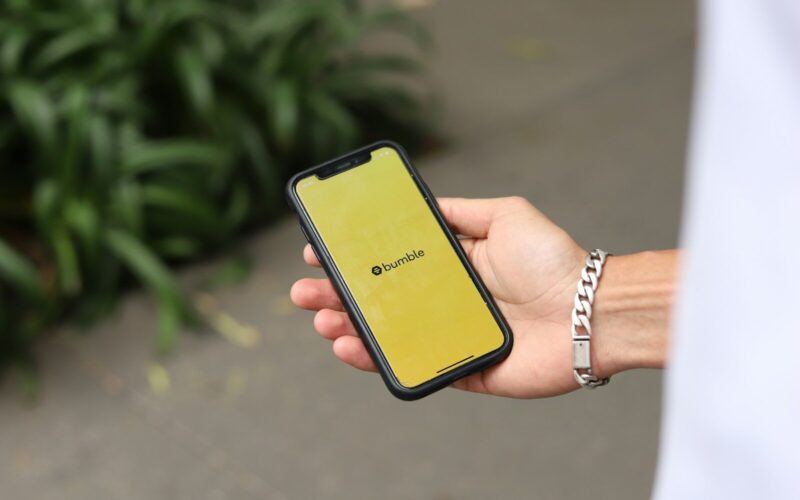
Different apps have different cultures. Hinge prompts are short by design, usually two or three sentences at most. Tinder bios tend to be brief because people are swiping fast. Bumble gives you more room and readers are often more engaged.
As a rule: say what you need to say, then stop. A tight three-sentence bio is better than a rambling paragraph that loses people halfway through.
Avoid the Wall of Text
If your bio is a single block of text with no breaks, most people won’t read it. Short paragraphs, or even line breaks between ideas, make it easier to scan. On a phone screen, white space is your friend.
The One-Liner Bio
Short bios work when they’re genuinely good. If you can land a single line that’s funny, interesting, or makes someone curious, that’s enough. The problem is that bad one-liner bios just look like you put zero effort in. Only go short if the line is actually good.

Practical Examples
Here’s the difference between a typical bio and one that sounds like a real person.
Typical bio: “Love the gym, good food, and travelling. Looking for someone genuine to explore the world with. Big family guy. Ask me anything!”
Rewritten: “I’ve been to 14 countries and somehow still don’t have a favourite. Recently got into bouldering after breaking my hand at it once. Looking for someone who has strong opinions about at least one thing.”
Same person, different impression. The rewrite is specific, slightly self-aware, and gives something to respond to.
The best profiles are the ones that feel like a person, not a product.
dating coach Logan Ury
A Quick Bio-Writing Checklist
Before you publish your bio, run it through this:
- Does it sound like something you’d actually say out loud?
- Is there at least one specific detail that’s actually about you?
- Does someone reading it have a reason to message you?
- Have you removed every cliche phrase?
- Is it readable on a phone screen without scrolling for thirty seconds?
If yes to all five, you’re in good shape.
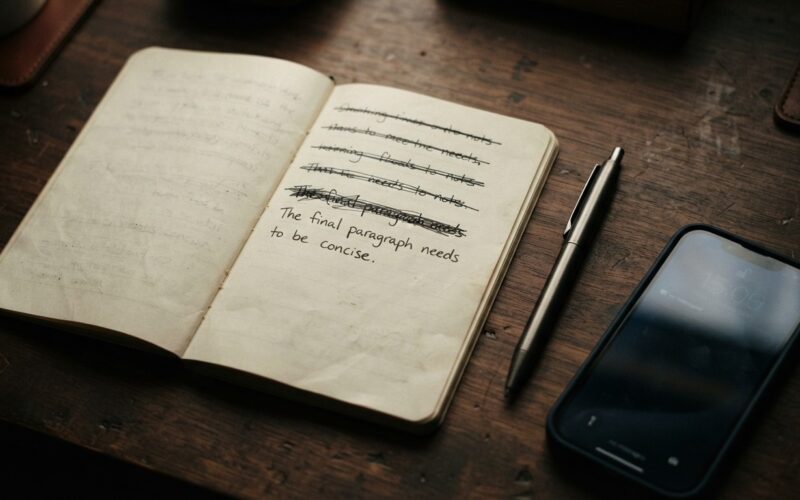
Writing a dating bio that sounds like you is less about being clever and more about being honest. People can spot a performed version of someone pretty quickly. The bios that work are the ones that feel real, have a bit of personality, and give the reader something to hold onto. Write like you’re talking to one person, not presenting yourself to a panel.
Summary
- Avoid generic lists. Specific details land harder than broad interests.
- Your bio should give someone a reason to message, not just read and move on.
- Sound like yourself. Read it out loud and check if it sounds like you.
- End with something open, a question or a signal of what you’re looking for.
- Cut every cliche phrase. They do more harm than good.
- Keep it readable. Short paragraphs and breaks help on mobile.
How long should a dating bio be?
There’s no magic number, but two to four sentences is a solid target for most apps. Say what you need to say and stop. A tight, well-written short bio beats a long, rambling one every time.
Should I mention what I’m looking for in my bio?
A brief signal at the end is fine and often helpful. You don’t need to list every requirement, but something like “looking for something real” or “ideally someone up for weekends away” gives people useful context without sounding like a job listing.
Is it okay to be funny in a dating bio?
Yes, but only if it’s actually funny. Forced humour reads worse than no humour at all. If you’re naturally funny, let it come through. If you’re not, lean into something else — honesty, curiosity, or a specific detail works just as well.
Should I mention my job in my bio?
Most apps have a field for occupation, so you don’t need to repeat it in the bio. If your job is genuinely interesting or gives useful context, one mention is fine. If it’s just a title, skip it and use the space for something more personal.
Can I use the same bio across multiple apps?
You can, but tweak the length and tone for each platform. A Hinge prompt answer needs to be shorter and snappier than a Bumble bio. Copy-pasting the same block of text everywhere can feel lazy if it doesn’t fit the space.
What if I genuinely don’t know what to write?
Ask a friend what they’d say about you to someone who hadn’t met you. The things they mention are usually more interesting than what you’d pick yourself. That’s your starting point.